
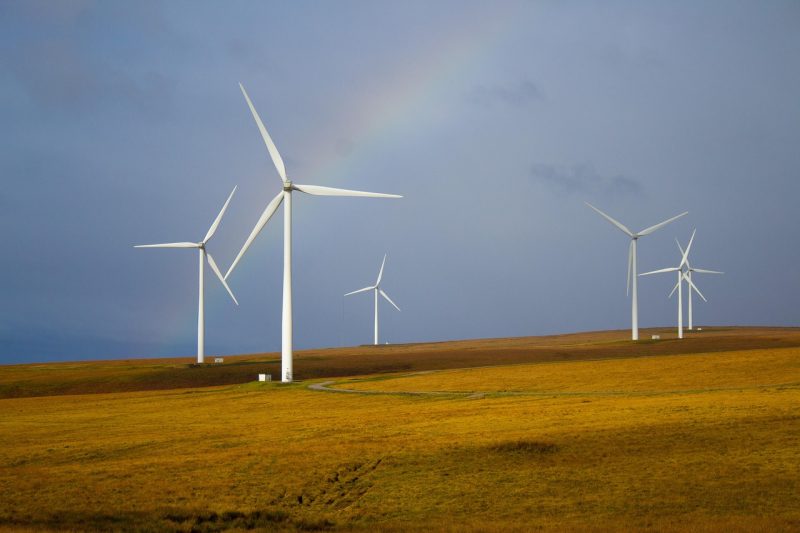
Wind turbines have multiplied across landscapes and coastlines at a pace few predicted even a decade ago. In 2024, the world added a record 117 gigawatts of new capacity, pushing the global total past 1.1 terawatts and supplying roughly 8 percent of electricity worldwide. That growth continued into 2025, with China alone installing more new turbines in the first half of the year than the rest of the planet combined. Yet the very visibility of these machines, towering white blades turning against the sky, has kept a stubborn question alive: are they quietly doing more harm than good?
The short answer, backed by the latest lifecycle assessments and field studies available in early 2026, is no. When measured across their full thirty-year life, wind turbines rank among the lowest-impact ways to generate electricity. Their carbon footprint is roughly one-seventieth that of coal and one-fortieth that of natural gas. But the question deserves a longer look, because real drawbacks exist, some visible and some less so, and because the country building most of the world’s turbines happens to be the planet’s largest emitter of greenhouse gases.
The Clear Benefits
Start with the benefits, because they are straightforward and massive. A typical onshore turbine pays back the carbon emitted during its manufacture, transport, and installation in somewhere between six months and two years of operation. After that, it runs on wind for decades, displacing fossil-fuel generation the entire time. In the United States alone, wind power avoided 351 million metric tons of carbon dioxide in 2024, equivalent to pulling 76 million passenger cars off the road. Globally, the figure runs closer to 900 million tons a year. Those numbers matter because climate change is the single largest environmental threat humanity faces; every ton avoided is a direct win.
The turbines themselves use no water once built, emit nothing while spinning, and occupy only a fraction of the land they stand on. Farmers can still plant crops or graze cattle right up to the base. Offshore installations can even function as artificial reefs, offering new habitat for some marine species. Compared with the open-pit mines, smokestacks, and cooling towers required for coal or gas, the contrast is stark.
Wildlife Concerns
Yet the machines are not invisible to the local environment. Bird and bat collisions top the list of documented harms. In the United States, estimates put annual bird deaths from turbines between 140,000 and 500,000, sometimes cited as high as 700,000 when older studies are included. Bats fare worse on a per-megawatt basis, with some migratory species particularly vulnerable. Golden eagles in the western states have become a flashpoint; roughly 270 were killed by turbines in 2024. These numbers sound large until placed alongside other human causes of avian mortality: domestic cats kill billions of birds annually, buildings hundreds of millions, cars and trucks hundreds of millions more. No species has shown population-level declines traceable to wind power. Still, the losses are real, and researchers continue to refine solutions, including painting one blade black to cut collisions by up to 70 percent, using radar to pause blades during migration peaks, and siting new projects away from known flyways.
End-of-Life Waste
The second major concern is waste. Modern turbine blades are made of fiberglass or carbon-fiber composites that, for years, had no economical recycling path and often ended up in landfills. That problem is now shrinking fast. More than 85 percent of a turbine’s total mass (tower, nacelle, generator) is already recyclable. Blade-specific technologies have moved from pilot projects to commercial scale. Mechanical grinding, thermal pyrolysis, and chemical solvolysis can recover fibers at 99 percent purity. New turbine designs rolling out in 2025 and 2026 use thermoplastic resins that can be melted and reused like plastic bottles. The industry projects the blade-recycling market will exceed a billion dollars by 2030. The “Achilles’ heel” is healing.
Noise, Visual, and Atmospheric Effects
Noise, visual intrusion, and shadow flicker still bother some neighbors, especially in rural communities where turbines suddenly dominate the horizon. Studies consistently find that annoyance has less to do with decibel levels, usually no louder than a refrigerator at 300 meters, and more to do with whether people feel the project was imposed on them. Acceptance tends to rise once the machines are up and running, and communities see the tax revenue or lease payments. Software now automatically shuts turbines during predictable flicker windows, removing that complaint almost entirely.
A newer line of inquiry looks at large-scale atmospheric effects. A cluster of turbines can create slight surface warming, on the order of a quarter-degree Celsius across a broad region, because the spinning blades mix air layers. The effect is measurable but tiny compared with the climate benefit of the clean electricity that those same turbines produce. Offshore projects raise separate questions about construction noise, electromagnetic fields from cables, and trace metal leaching from coatings. Early monitoring shows mixed results: some fish species thrive around the foundations, others avoid the area during pile-driving. Scientists describe the knowledge base here as “evolving but not alarming.”
What Happens When the Wind Slows Down
Wind power also varies with the weather. Turbines generate only when wind speeds fall within a specific range, starting around 3 to 4 metres per second and reaching full output near 12 to 15 metres per second. When winds weaken for days or weeks, production drops, sometimes sharply. Grid operators cover the gap with other sources, often natural-gas plants. In Germany in 2025, wind output slipped 3 to 4 percent below the previous year despite new capacity, while hydropower also declined; utilities responded by raising gas-fired generation nearly 6 percent, the highest since 2021. Parts of Europe experienced similar “wind droughts,” pushing up short-term costs and emissions.
These episodes highlight a genuine operational challenge, yet they are neither new nor unmanageable. Modern weather models and artificial intelligence deliver reliable forecasts days in advance. Power flows across borders, batteries charge during surpluses and discharge during lulls, and flexible demand programs shift usage. No major blackouts in 2025 were blamed solely on low wind. Over the thirty-year life of a turbine, the emissions avoided by its clean generation dwarf the temporary fossil-fuel use required on calm days.
The China Manufacturing Question
Then there is the China question. Chinese factories built most of the turbines added worldwide in 2024 and 2025. The top four manufacturers globally are now all Chinese, and the country installed roughly 70 percent of new global capacity last year. Critics point out that China remains the planet’s largest carbon emitter, still firing up new coal plants for grid stability. Doesn’t that make the whole enterprise self-defeating?
The numbers say otherwise. China’s own emissions were flat or slightly down in 2025 while its economy grew, largely because wind and solar met nearly all the increase in electricity demand. In the first half of the year alone, the country added more wind capacity than the rest of the world. Those domestically made turbines are displacing coal inside China at a staggering rate. Meanwhile, the turbines China exports carry a carbon payback period only marginally longer than European-made ones, still well under two years, because the operational savings dwarf any extra emissions from manufacturing on a coal-heavy grid. Independent analyses from the IEA, GWEC, and Ember all reach the same conclusion: without Chinese supply chains, global wind deployment would be slower and more expensive, leaving coal and gas in place longer. The net effect of China’s manufacturing dominance has been to accelerate decarbonization, not slow it.
Remaining Challenges
None of this means the industry is perfect. Supply-chain concentration carries geopolitical risks, and better domestic manufacturing capacity in Europe and North America would be welcome for resilience. Rare-earth magnets and other materials still carry environmental costs upstream. But those are engineering and policy challenges, not evidence that wind power itself is environmentally harmful.
Conclusion
Every major 2025–2026 lifecycle study, whether from NREL, IRENA, or academic meta-analyses, reaches the same verdict: wind turbines sit near the bottom of the environmental-impact chart for electricity generation. Their drawbacks are real, measurable, and increasingly manageable. Their advantages, measured in avoided emissions, improved air quality, and reduced water use, are orders of magnitude larger.
The machines are not flawless guardians of the planet. They are, however, one of the most effective tools humans have yet invented for pulling the planet back from the brink of climate catastrophe. As blade recycling matures, collision-mitigation technology spreads, supply chains continue to green themselves, and grids gain flexibility through storage and smarter operations, that balance tilts further in their favor. The question is no longer whether wind turbines are bad for the environment. It is how quickly we can deploy them responsibly.
Sources:
- https://www.irena.org/-/media/Files/IRENA/Agency/Publication/2025/Mar/IRENA_DAT_RE_Capacity_Highlights_2025.pdf
- https://www.irena.org/Publications/2025/Mar/Renewable-capacity-statistics-2025
- https://www.irena.org/-/media/Files/IRENA/Agency/Publication/2025/Mar/IRENA_DAT_RE_Capacity_Statistics_2025.pdf
- https://www.iea.org/reports/renewables-2025
- https://iea.blob.core.windows.net/assets/76ad6eac-2aa6-4c55-9a55-b8dc0dba9f9e/Renewables2025.pdf
- https://www.sciencedirect.com/science/article/pii/S1364032125011025
- https://www.nrel.gov/docs/fy25osti/87970.pdf
- https://www.energy.gov/eere/wind/wind-turbine-recycling-assessment-report-guide-recycling-industry
- https://www.carbonbrief.org/analysis-chinas-co2-emissions-have-now-been-flat-or-falling-for-21-months/
© 2025 NewsBucket.org All rights reserved. This document cannot be duplicated or distributed in any way, whether it be electronically, mechanically, by photocopying, recording, photocopying, or another method, without NewsBucket.org's prior written consent.

Author: Jake
Jake is a retired computer technician with over three decades of experience troubleshooting hardware, configuring networks, and keeping systems secure. Now, he combines his passion for technology, innovation, and hands-on experimentation by writing about his favorite interests—hydroponics, homebrewing, beer culture, cryptocurrency, artificial intelligence, and the evolving tech landscape. Whether he’s exploring the latest in smart gardening or demystifying new digital currencies, John brings a practical and engaging perspective, shaped by his many years behind the keyboard and out in the workshop.
0 Comments